
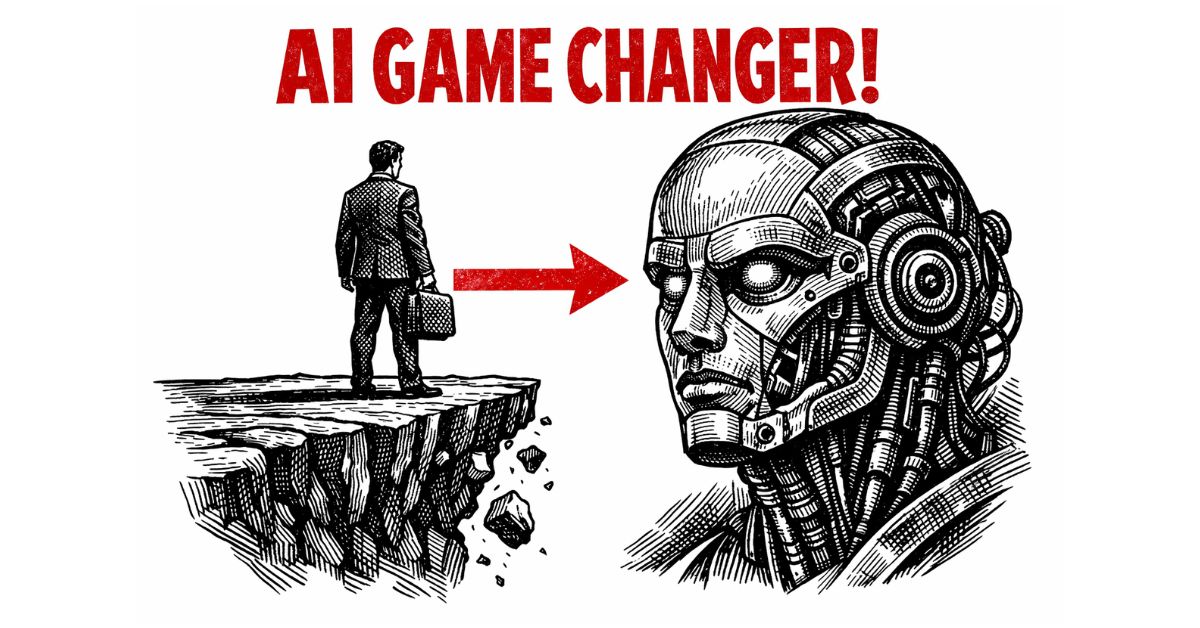
The AI Revolution Just Came for IBM — And It’s Just Getting Started
Quick Summary
- IBM’s Stock Drop: IBM’s stock price dropped 13.2% in a single session, its worst single-day decline since October 2000, due to Anthropic’s new AI tool.
- Anthropic’s AI Tool: Anthropic’s Claude Code can modernize COBOL, a legacy programming language critical to many businesses.
- COBOL’s Importance: COBOL runs 95% of ATM transactions in the U.S. and is crucial in finance, airlines, and government systems.
- Broader Trend: This is part of a larger trend where AI is disrupting traditional tech companies.
- Future Implications: As AI continues to advance, more disruptions are expected across various industries.
With nearly two decades in finance, I’ve watched markets absorb shocks of every kind. But what I’m watching Anthropic do right now to the software sector is unlike anything I’ve seen before. And if you own any tech stocks, you need to understand what’s happening.
IBM stock price dropped 13.2% in a single session, its worst single-day decline since October 2000. The trigger was a blog post from Anthropic, the AI startup behind the Claude chatbot. The post announced that Claude Code, its AI coding tool, can now modernize COBOL, a 60-year-old programming language that powers much of IBM’s core business. In a matter of hours, Anthropic erased billions in IBM’s market value. And based on the pattern we’ve seen over the past few weeks, this is just the latest chapter in a bigger, scarier story for legacy tech.
Here is what you need to know immediately. Anthropic’s AI can now automate the exploration and analysis of COBOL codebases, tasks that once required armies of consultants working for years. COBOL runs 95% of ATM transactions in the United States. It powers hundreds of billions of lines of code in banking, insurance, and government systems. And most of it runs on IBM mainframes. When AI can modernize this code in quarters instead of years, the entire economic model of legacy system maintenance collapses.
What Is COBOL? (And Why You Should Care Even If You’ve Never Heard of It)
Most people outside the tech world have never heard of COBOL. But here’s the thing: COBOL quietly runs your life.
COBOL stands for Common Business-Oriented Language. It was developed in the late 1950s and is one of the oldest programming languages still in active use. And when I say active, I mean extremely active.
- An estimated 95% of all ATM transactions in the U.S. run on COBOL
- Hundreds of billions of lines of COBOL run in production every single day
- It powers critical systems across banking, insurance, airlines, and government
IBM’s mainframe computers are essentially the hardware home for COBOL. Major banks, federal agencies, and insurance companies rely on IBM mainframes specifically because of how reliable they are for COBOL-based workloads. That’s a core part of IBM’s business.
For decades, modernizing COBOL systems was basically impossible without a massive investment. You needed armies of specialized consultants, years of work, and budgets that often ran into the hundreds of millions. Most companies just left their legacy systems alone because the cost of modernizing exceeded the cost of just leaving it broken.
Anthropic just changed that equation overnight.
Anthropic AI’s Claude Code Update Is a Direct Threat to IBM’s Business Model
Here’s what Anthropic announced in its Anthropic news blog post on Monday.
Claude Code, its AI coding tool, can now be used to map dependencies across thousands of lines of COBOL code, document entire workflows, and identify risks that would have taken human analysts months to surface. In Anthropic’s own words, “with AI, teams can modernize their COBOL codebase in quarters instead of years.”
Think about what that actually means.
The work that used to require a 50-person consulting team working for three years can now potentially be done by a small team using Claude Code in a fraction of the time and at a fraction of the cost. That’s not an incremental improvement. That’s a business model threat.
IBM has spent decades building a moat around COBOL modernization services. Anthropic just handed the keys to that moat to any company with an internet connection.
And here’s the part that should really get your attention: this isn’t the first time Anthropic has done this. Earlier in February, the company released legal plugins for Claude that triggered a brutal sell-off in legal tech stocks. Then came the security tool that hammered cybersecurity names like CrowdStrike and Datadog. Now it’s IBM’s turn. Every few weeks, Anthropic announces a new capability that goes directly after an established industry’s revenue model.
During my years on Wall Street, I’ve seen disruptive technologies come and go. But the speed and breadth of what Anthropic is doing is something I covered in my newsletter at TheFinanceNewsletter.com a few weeks ago, and I want to be clear: this disruption cycle is accelerating, not slowing down.
The ‘AI Scare Trade’ Is Real. But Is the Market Overreacting?
Here’s where it gets complicated.
IBM’s selloff didn’t happen in a vacuum. The same day, a bearish research note from a little-known firm called Citrini Research was making the rounds on social media. The report, written by James van Geelen, laid out a hypothetical scenario set in June 2028 where AI’s disruption had caused mass unemployment for white-collar workers, declining consumer spending, software-backed loan defaults, and economic contraction.
The report was careful to label itself a “scenario, not a prediction.” But that didn’t stop Wall Street from reading it like a prophecy.
Then came Nassim Taleb.
Taleb, the author of “The Black Swan” and one of the most influential risk thinkers alive, posted a warning that investors should brace for escalating volatility and even bankruptcies in the software sector. To Taleb, the markets are underpricing structural risk while overestimating how durable today’s AI winners will be.
The combination of the Citrini report, Taleb’s warning, and Anthropic’s COBOL announcement created a perfect storm. DoorDash fell 6%. American Express dropped 6%. Visa, Mastercard, Uber, and Capital One all fell 4% or more. This was a broad market panic, not a surgical reaction to one company’s news.
So is the market overreacting?
Honestly? Both things are true at the same time.
The fear is real and warranted. Anthropic is systematically dismantling the value proposition of legacy enterprise software. If Claude Code can replace what IBM charges companies millions for, IBM’s revenue model is genuinely at risk. That’s not fiction. That’s math.
But the panic is exaggerated. Michael O’Rourke, chief market strategist at Jonestrading, put it best: “I have seen this market exhibit incredible resilience in the face of actual negative news. Now a literal work of fiction sends it into a tailspin.” Citrini’s report is a thought experiment. DoorDash isn’t going to zero because of a hypothetical 2028 scenario.
The truth lives in the middle. The underlying disruption is real. The timeline for that disruption is being wildly overestimated by panicking investors.
Why Anthropic’s News Today Keeps Hammering the Same Stocks
I want to zoom out for a second, because the pattern here is worth paying attention to.
Anthropic is no longer just an AI chatbot company. Over the past few months, it has been systematically building what the industry calls an “application layer” on top of its Claude large language model. In plain English, that means it’s not just building a general-purpose AI. It’s building specific, targeted tools that go directly after specific, established industries.
- Legal tech plugins attacked the legal software market
- Claude Code Security attacked the cybersecurity market
- The COBOL modernization update attacked IBM’s mainframe services business
Each announcement is a sniper shot, not a scatter gun. And each one sends a fresh wave of fear through investors holding stocks in the targeted sector.
The broader software sector has been in sell-first-ask-questions-later mode for weeks. Insurance brokers, private credit firms, wealth management companies, and real estate services stocks have all been swept up in what analysts are now calling the “AI scare trade.”
When I talked about this on my social media (@FluentInFinance), the reaction was overwhelming. People are scared. And honestly, some of that fear is justified. But fear without a plan is just paralysis.
What IBM’s Worst Day Since 2000 Tells Us About the Next Phase of AI Disruption
Here’s the bigger picture that most people are missing.
IBM’s 13% single-day crash isn’t really about COBOL. It’s about the market finally pricing in a question it’s been avoiding: what happens to the companies that built billion-dollar businesses on top of complexity, when AI eliminates that complexity?
For decades, IBM’s mainframe business was protected by a simple fact: COBOL was so complicated, so specialized, and so deeply embedded in critical systems that very few people could touch it. That complexity was the moat. IBM charged premium prices because the switching cost was impossibly high.
Claude Code just lowered that switching cost dramatically.
And this pattern is going to repeat. Over and over again, across dozens of industries.
Think about the businesses that charge premium prices specifically because their work is complex and hard to understand. Tax prep. Medical coding. Insurance underwriting. Regulatory compliance. Procurement analysis. If AI can automate the “complexity” that justifies their fees, their pricing power evaporates overnight.
This is what Nassim Taleb is warning about. Not that every software company goes bankrupt tomorrow. But that the structural assumption underpinning their valuations, that complexity creates durable competitive advantage, may no longer hold in an AI-powered world.
Investor Takeaways: What to Do Right Now
Okay, so here’s what you actually do with all of this.
I’ve been investing for over 20 years, and I’ve seen this movie before. The technology changes. The panic is new. The principles aren’t.
1. Audit your portfolio for “complexity moat” businesses
Ask yourself this question about every stock you own: does this company’s value come from doing something genuinely hard, or from doing something that used to be hard? If the answer is “it used to be hard,” your position carries AI disruption risk. That doesn’t mean sell everything. It means know what you own.
2. Don’t trade on panic headlines
IBM’s 13% drop in one day is dramatic. But the market has a well-documented history of overreacting to disruptive tech news in the short term and then correcting. The companies that got hammered when the internet appeared in the 90s weren’t all worthless. Many adapted. Some thrived. Panic selling into AI fear headlines is a great way to lock in losses you didn’t have to take.
3. Watch what Anthropic announces next
Anthropic news is now, functionally, a leading indicator for sector-specific volatility. If Anthropic announces a new Claude Code capability, you can expect the stocks in that sector to get hit within 24 to 48 hours. This is information you can use. Subscribe to Anthropic’s blog, follow their announcements, and get ahead of the “scare trade” rather than reacting to it.
4. Think in terms of who benefits, not just who gets hurt
Every company Anthropic disrupts creates a winner on the other side. If COBOL modernization gets dramatically cheaper, the companies that were paying IBM millions for mainframe services get a windfall. Banks, insurance companies, and government agencies that relied on IBM could reallocate that budget to growth initiatives. Disruption destroys value in one place and creates it in another. Find where the value lands.
5. Consider the long-term IBM picture before writing it off
IBM has surprised investors before. The company has a long history of reinventing itself. It pivoted from hardware to services. Then from services to cloud. It still holds enormous relationships with Fortune 500 companies and government agencies. A 13% single-day drop doesn’t mean IBM is finished. It means investors are scared. Those are two very different things. IBM’s response to the Claude Code threat will tell us a lot about whether the company adapts or fades.
Final Thoughts: Anthropic’s Disruption Cycle Is Just Beginning
Here’s the hard truth that the Citrini report, Nassim Taleb, and IBM’s worst day in 25 years are all pointing at.
We are in the early innings of an AI disruption cycle that will fundamentally reprice the value of complexity across the entire economy. The businesses that charged premium prices because their work was hard to understand are now running out of time to adapt.
Anthropic isn’t just building a chatbot anymore. It’s building a systematic, industry-by-industry dismantling of legacy software value chains. And based on the pace of their recent announcements, they’re not slowing down.
The investors who will come out ahead are the ones who stop asking “is the market overreacting?” and start asking “where does this disruption go next, and who wins when it gets there?”
COBOL was just the latest chapter. The story is far from over.
I cover developments like this every week at TheFinanceNewsletter.com, where over 100,000 readers get clear, actionable financial insights. If you’re trying to make sense of what AI means for your investments, that’s the best place to start.
Important Points to Remember (With Actionable Advice)
1. AI changes the economic equation of legacy systems. For decades, modernizing COBOL cost more than maintaining it. Anthropic’s Claude Code flips that equation entirely. What was economically impossible is now inevitable. Action: If you run a business with legacy systems, recalculate your modernization ROI using AI-powered tools. The math probably changed this week.
2. IBM’s 13% drop signals a structural shift, not a temporary panic. When IBM stock falls that hard on news that isn’t about earnings, it means investors are repricing the entire business model. Action: Review your portfolio for companies that profit from “complexity moats”—businesses that charge premium prices because their work is hard to understand or change.
3. COBOL modernization will take time, but the market prices future cash flows today. Banks won’t migrate off mainframes tomorrow. But the fact that they can now changes their long-term relationship with IBM. Action: Don’t assume a slow transition means no transition. Start planning for the end state, not just the current reality.
4. The “AI scare trade” follows a predictable pattern. Anthropic announces a new capability. Stocks in the targeted sector sell off. The selling spreads to related industries. Action: Subscribe to Anthropic’s blog and watch their announcements. You can get ahead of the next wave if you know what’s coming.
5. Every disruption creates winners on the other side. While IBM suffers, companies that enable AI-powered modernization benefit. Cloud providers, AI infrastructure firms, and modern software platforms gain. Action: Ask not just “who gets hurt?” but “who benefits?” when you see AI news.
6. Business leaders must audit technical debt now. The cost of waiting just went up. Every month you delay modernization is a month your competitors might use AI to leapfrog you. Action: Create an inventory of legacy systems, their costs, and their risks. Run a small AI pilot project to learn what works.
7. Tech professionals should learn AI tools immediately. AI isn’t coming for your job—it’s coming for the boring parts of your job. The professionals who thrive will be the ones who learn to leverage tools like Claude Code. Action: Spend 5 hours this week learning how AI coding assistants work. The learning curve is worth it.
8. Diversify across disruption scenarios. You can’t predict exactly which domino will fall next. The Citrini report imagined AI disrupting food delivery. Anthropic actually disrupted mainframe computing. Action: Own some companies that might benefit from AI, some that might be resilient, and some that might adapt. Don’t bet everything on one outcome.
9. Watch for adaptation signals from legacy companies. IBM’s response to this threat will tell us a lot. Do they embrace AI-powered modernization or fight it? Do they partner with AI companies or build competing tools? Action: Follow the companies in your portfolio closely after disruption news. How they respond matters more than the initial hit.
10. Panic is expensive. Clarity is profitable. The worst investment decisions are made in fear. The best are made with clear understanding. Action: When you see scary headlines, pause. Ask: “What’s actually changing? How fast? Who wins? Who loses?” Then decide.
Table: The AI Disruption Landscape
| Category | Legacy Model (Pre-AI) | AI Disruption (Post-Claude) | Winners | Losers | Timeline |
|---|---|---|---|---|---|
| COBOL Modernization | \$50M+ projects, 3-5 years, armies of consultants | AI-powered analysis in quarters, fraction of cost | Cloud providers, modernized banks, Anthropic | IBM, legacy consultancies | 2025-2028 |
| Legal Document Review | \$400/hour associates, weeks of analysis | AI plugins scan millions of pages in hours | AI legal tech, corporate legal teams | Traditional law firms, legal outsourcers | 2024-2027 |
| Cybersecurity Scanning | Manual penetration testing, quarterly audits | Continuous AI-powered vulnerability detection | AI security platforms, automated responders | Legacy cybersecurity consultants | 2024-2026 |
| Software Development | Teams of engineers, months per feature | “Vibe coding”—natural language to functional apps | AI-native development platforms | Traditional software vendors, junior dev roles | 2025-2030 |
| Payment Processing | 2-3% transaction fees, intermediary networks | AI agents negotiate direct, fee-free transactions | Blockchain protocols, direct payment rails | Visa, Mastercard, traditional processors | 2026-2029 |
| Technical Consulting | High-margin human expertise, billable hours | AI-augmented delivery, lower cost, higher scale | Tech consultancies using AI tools | Pure human-capital consultancies | 2024-2028 |
| Insurance Underwriting | Manual risk assessment, actuarial tables | Real-time AI risk modeling, dynamic pricing | InsurTech AI platforms, data-rich insurers | Traditional underwriters, slow adopters | 2025-2029 |
| Financial Analysis | Analyst teams, quarterly reports, delayed insights | Real-time AI processing, instant scenario modeling | AI-powered analytics, algorithmic traders | Traditional research departments | 2024-2027 |
FAQs (Frequently Asked Questions)
What exactly caused IBM stock to drop 13% in one day?
IBM stock price collapsed after Anthropic announced that its Claude Code AI tool can now automate COBOL modernization—the process of updating legacy computer code that runs critical financial infrastructure. COBOL powers 95% of ATM transactions in the U.S. and hundreds of billions of lines of code in banking and government. IBM built a multi-billion dollar business maintaining these systems because modernization used to require years and millions in consultant fees. AI just made it fast and cheap, threatening IBM’s core revenue model. This was IBM’s worst single-day decline since October 2000.
What is COBOL and why does it matter for IBM stock?
COBOL (Common Business-Oriented Language) is a programming language developed in 1959 that still runs the global financial system. An estimated 800 billion lines of COBOL code run in production daily, powering ATM networks, airline reservations, insurance systems, and government infrastructure. Most of this runs on IBM mainframe computers, which generate billions in hardware sales, software licenses, and maintenance contracts for IBM. When Anthropic AI made COBOL modernization cheap and fast, it threatened the entire economic foundation of IBM’s mainframe business.
Is the IBM stock crash an overreaction or justified?
Both are true simultaneously. The fear is warranted—Anthropic’s tool genuinely threatens IBM’s high-margin mainframe services revenue. The math is real: if companies can modernize COBOL in quarters instead of years using AI, they no longer need IBM’s expensive consultants and maintenance contracts. However, the panic is exaggerated—COBOL modernization will take years to implement across thousands of critical systems. IBM won’t disappear overnight. The market is pricing in a permanent structural shift, not predicting bankruptcy next quarter. Smart investors distinguish between the real disruption and the temporary panic.
What is the “AI scare trade” and how does it work?
The AI scare trade is a market pattern where stocks of legacy tech companies crash immediately after AI companies announce capabilities targeting their core business models. It works in three steps: (1) Anthropic news or similar announces a specific AI tool, (2) investors identify which companies charge premium prices for that now-automated service, (3) those stocks sell off 5-15% within 24-48 hours. We’ve seen this with legal tech stocks, cybersecurity names like CrowdStrike, and now IBM stock. The trade reflects genuine disruption but often overshoots in the short term.
Should I sell my IBM stock after this news?
Don’t trade on panic headlines. During my 20 years in finance, I’ve seen markets overreact to disruptive tech news then correct as companies adapt. IBM has reinvented itself multiple times—from hardware to services to cloud. IBM stock price at $223 may represent a buying opportunity if you believe IBM will pivot to AI-powered modernization services themselves. However, you must audit whether IBM’s competitive advantage was “complexity moat” or genuine innovation. If it was complexity, the risk is structural. Consider position sizing, not panic selling.
How does Anthropic’s Claude Code actually modernize COBOL?
Claude Code uses artificial intelligence to automate three phases that previously required human consultants: (1) mapping dependencies across thousands of lines of code in minutes versus months, (2) documenting workflows automatically rather than through employee interviews, (3) identifying risks that would take human analysts months to surface. Anthropic stated: “Legacy code modernization stalled for years because understanding legacy code cost more than rewriting it. AI flips that equation.” The tool doesn’t replace programmers entirely—it makes the exploration and analysis phases 90% faster and cheaper.
Which stocks are next in the AI scare trade?
Watch companies with “complexity moats”—businesses charging premium prices because their work is hard to understand, specialized, or requires rare expertise. Potential next targets include: Oracle (database maintenance), SAP (enterprise software customization), traditional cybersecurity consultancies, legal services companies, insurance brokers with complex underwriting, and tax preparation firms. Follow Anthropic’s blog closely—each announcement targets a specific sector within weeks. The pattern is: AI capability reveal → sector identification → 24-48 hour selloff.
What is “vibe coding” and why does it threaten software stocks?
“Vibe coding” refers to AI systems that generate functional applications from natural language descriptions—you describe what you want, the AI builds it. This threatens the entire software development industry because business users can create custom applications without traditional software vendors or development teams. If companies can “vibe code” solutions instead of buying expensive enterprise software licenses, the software-as-a-service model collapses. This concept, mentioned in the viral Citrini Research report, extends beyond IBM stock to threaten Microsoft, Salesforce, and the entire legacy software ecosystem.
How can investors profit from AI disruption instead of getting hurt?
Three strategies: (1) Rotate from disrupted to disruptors—sell legacy software, buy AI infrastructure (compute, data centers, NVIDIA), (2) Identify adaptation plays—companies using AI to attack legacy competitors, (3) Set contrarian triggers—quality companies caught in AI scare trade panics often recover; set price alerts to buy when others panic-sell. The key is preparation, not prediction. Know which sectors are vulnerable before the announcement drops.
Is IBM really at risk of bankruptcy from this AI disruption?
No—bankruptcy is unlikely in the near term. IBM remains a massive enterprise with Fortune 500 relationships, government contracts, and a history of reinvention. However, the valuation math has changed. If AI erodes mainframe maintenance revenue—IBM’s highest-margin business—the stock’s price-to-earnings ratio and growth assumptions must reset lower. IBM stock price reflects this repricing, not insolvency. The risk is secular decline, not overnight collapse. Watch IBM’s response: partnerships with AI companies or competing tools signal adaptation; defensive legal action or denial signals danger.
What should I do with my tech stock portfolio this week?
Three immediate actions: (1) Audit for complexity moats—list every holding that charges premium prices for “hard” work; these face AI disruption risk, (2) Create an AI watchlist—track companies aggressively adopting AI to attack legacy competitors, (3) Set volatility alerts—the AI scare trade creates 10-20% swings; prepare to buy quality names when panic overshoots. Don’t sell everything—diversify across disruption scenarios rather than avoiding AI exposure entirely.
How does this affect the broader stock market beyond tech?
The IBM stock collapse triggered contagion selling across financial services—American Express fell 6%, Visa and Mastercard dropped 4%+, banks and insurance names sold off. Why? Markets realized that if AI can disrupt IBM’s “impossible to replace” systems, no complex service business is safe. This creates broader volatility as investors reassess which white-collar industries face AI automation. The AI scare trade extends beyond tech to any sector charging fees for specialized knowledge or complex processes.
Will AI replace all programmers and software engineers?
No—but it will reshape the profession profoundly. AI tools like Claude Code eliminate the tedious exploration and documentation phases, but human judgment, business context, and strategic thinking remain essential. The programmers who thrive will be those who leverage AI to multiply their productivity, not those who compete against it. Junior-level coding tasks face the most immediate risk. Senior architects and strategic technologists become more valuable as implementation gets cheaper. The COBOL modernization trend actually creates short-term demand for programmers who understand both legacy systems and new AI tools.
What is Nassim Taleb’s warning about AI and software stocks?
Nassim Taleb, author of “The Black Swan,” warned that markets are underpricing structural fragility in the software sector while overestimating durability of current AI leaders. He predicts escalating volatility and potential bankruptcies as AI eliminates the complexity advantages that justified premium valuations. Taleb’s framework suggests that IBM stock isn’t an outlier—it’s the first visible crack in a broader edifice of “complexity moat” businesses that AI is systematically dismantling. His warning: don’t assume today’s winners survive tomorrow’s disruption.
How fast will COBOL actually get modernized across the industry?
Slower than markets fear, faster than incumbents hope. Despite Anthropic AI’s capabilities, COBOL modernization involves: (1) testing critical financial infrastructure where failure isn’t an option, (2) regulatory approval for banking system changes, (3) integration with thousands of interconnected legacy systems. Major banks won’t flip a switch overnight. However, the economic equation has permanently shifted—projects that were “impossible” at $50M are now “inevitable” at $5M. Expect a 5-10 year modernization wave starting with non-critical systems in 2025-2026, accelerating through decade’s end.
Can IBM adapt and survive this AI disruption?
History says yes, current trajectory says maybe. IBM survived the PC revolution by pivoting to services. It survived cloud disruption by acquiring Red Hat. The question is speed and will. Can IBM pivot from “mainframe maintenance” to “AI-powered modernization services”? Can they partner with Anthropic or build competing tools? Can they capture value from the transition rather than fighting it? IBM’s response in the next 90 days will determine whether this 13% drop is a buying opportunity or the start of secular decline. Watch their earnings call language and partnership announcements closely.
What other AI companies besides Anthropic should I watch?
While Anthropic news currently drives the most targeted disruption, monitor: OpenAI (broad capability announcements), Google DeepMind (enterprise AI integration), Microsoft (Copilot ecosystem targeting Office/enterprise workflows), Meta (open-source models enabling rapid capability diffusion). However, Anthropic’s “sniper” approach—specific tools for specific legacy problems—creates the most immediate stock-specific volatility. Their pattern of announcing legal, security, and now COBOL capabilities suggests more targeted strikes coming.
How do I protect my portfolio from the next AI scare trade event?
Preparation beats prediction. You can’t know which stock crashes next, but you can: (1) Map your exposure—identify every “complexity moat” business you own, (2) Size positions accordingly—reduce concentration in highest-risk names, (3) Set news alerts for Anthropic, OpenAI, and Google AI announcements, (4) Prepare cash reserves to deploy when panic creates 15%+ discounts on quality names, (5) Diversify into AI infrastructure—the “pick and shovel” plays that benefit regardless of which software company wins. IBM stock was the warning. The next one won’t be.
