
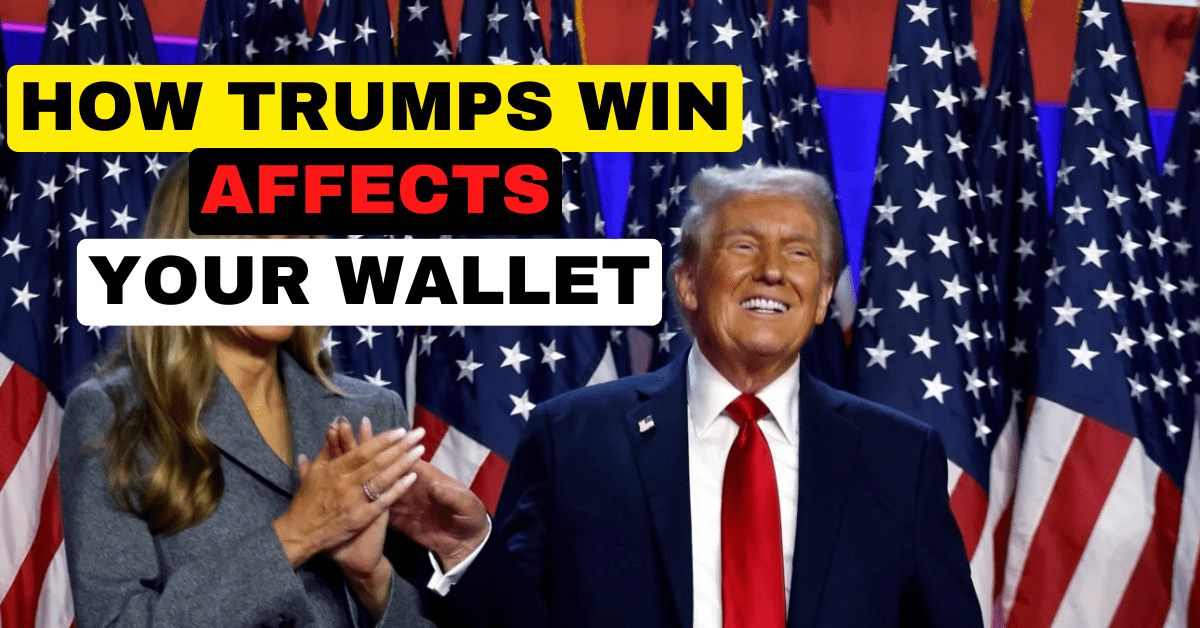
Donald Trump’s victory in the 2024 presidential election has set the U.S. economy on a path of higher tariffs, lower taxes, and deregulation.
Taxes
- One of Trump’s key tax proposals is to extend the individual and estate tax cuts from his 2017 Tax Cuts and Jobs Act, which are set to expire at the end of 2025.
- He has also promised to eliminate federal income taxes on tips, Social Security benefits, and overtime pay – which could provide financial relief for certain groups of workers, but also reduce revenue for programs like Social Security.
- Trump’s overall tax plan is estimated to increase the deficit by $4.1 trillion over 10 years, according to analyses. The large tax cuts, especially for corporations and the wealthy, are expected to contribute to this.
Stock Market
- The initial market reaction to Trump’s victory was positive, with stocks rallying. Investors likely see his proposals for corporate tax cuts and deregulation as favorable for profits.
- However, his protectionist trade policies, including broad tariffs, could weigh on multinational companies and sectors like semiconductors, autos, and clean energy that are exposed to trade tensions.
- Bond yields are expected to rise further due to concerns about growing deficits from Trump’s economic agenda, which would hurt bond prices.
- Emerging markets could face headwinds from a strengthening dollar, higher US interest rates, and the potential for renewed trade conflicts.
Interest Rates
- With Trump’s economic agenda potentially fueling higher inflation, the Federal Reserve would likely need to keep interest rates elevated to cool the economy.
- This would translate to higher borrowing costs for consumers, including on mortgages, auto loans, and credit cards. Mortgage rates could climb further from their current level above 6%.
- However, savers could benefit from higher yields on their deposits and other fixed-income investments.
Housing
- Trump has proposed measures aimed at increasing the housing supply, such as opening up more federal lands for development and reducing regulations. But experts are skeptical these steps would have a major impact.
- His plan to deport millions of immigrants could exacerbate housing affordability issues, as the construction industry relies heavily on immigrant labor.
- The president-elect has not unveiled detailed housing policies, and affordability would likely remain a key challenge given persistent supply shortages and high mortgage rates.
Inflation
- Trump has promised to “defeat” inflation, but economists say many of his policies could actually stoke price increases.
- His plan to impose sweeping tariffs on imports, including a 60% tariff on goods from China, would likely lead to higher consumer prices on a wide range of products like clothes, appliances, and more.
- Deporting millions of undocumented immigrants could also drive up prices, especially in industries like construction that rely heavily on immigrant labor.
- However, Trump has said he would take steps to lower energy prices, such as increasing oil and gas production on federal lands. But experts are skeptical this would have a major impact on gas prices, which are influenced more by global market forces.
Overall Outlook
While Trump’s economic vision aims to boost growth, cut taxes, and protect American jobs, many of his proposals face an uphill battle in Congress and could have unintended consequences. Economists warn his policies could stoke inflation, balloon the deficit, and disrupt global trade – outcomes that could undermine consumer purchasing power and financial stability in the long run.
Ultimately, the extent to which Trump is able to enact his agenda will depend on the balance of power in Congress. But his presidency is likely to usher in a new era of economic policy that departs significantly from the status quo, with far-reaching impacts on household budgets, the financial markets, and the broader economy.
FAQ
How would Trump’s tariff plans affect consumers?
Trump has proposed imposing broad tariffs of 10-20% on all imports, as well as a 60% tariff on Chinese goods. Economists warn these tariffs would likely lead to higher prices for a wide range of consumer products like clothes, appliances, and more. Companies would likely pass along at least some of the added costs to shoppers.
Would Trump’s tax cut plans benefit the middle class?
Trump has proposed extending the individual tax cuts from his 2017 law, which provided the biggest benefits to high-income earners. Independent analyses suggest middle-income households would see relatively modest gains, while the wealthy and corporations would gain the most. Trump has also floated targeted tax breaks like eliminating taxes on tips and Social Security benefits.
How could Trump’s immigration policies impact the economy?
Trump has vowed to deport millions of undocumented immigrants, which could create labor shortages in industries like construction that rely heavily on immigrant workers. Economists warn this could exacerbate housing affordability issues and drive up prices across the economy as companies face higher labor costs.
Would a Trump presidency lead to higher interest rates?
Likely yes. Trump’s economic agenda, including tax cuts and increased spending, is expected to stoke inflation pressures. This would force the Federal Reserve to keep interest rates elevated to cool the overheating economy. Higher rates would mean costlier mortgages, auto loans, and credit card borrowing for consumers.
What sectors of the stock market could benefit or suffer under Trump?
Sectors like finance, energy, and defense could see gains from Trump’s policies. But multinational companies, technology firms, and industries exposed to trade conflicts (like semiconductors and autos) may struggle. The overall market is expected to remain volatile as investors grapple with the implications of Trump’s economic vision.
